One Conversation at a Time
The Global Program Quietly Rebuilding Trust
In an age of fracture and suspicion, a quiet movement is taking place in community halls, university campuses, and war-scarred neighbourhoods.
A rigorous independent evaluation has confirmed its impact is real.
“The world is suffering from many diseases,” a Trustbuilding Program participant from Indonesia once remarked, “but the worst is the attack on the truth.”
It is a diagnosis that resonates from Washington to Nairobi to Jakarta: there is a creeping erosion of the bonds that hold societies together. Yet in communities across 14 countries, something quietly extraordinary has been taking shape: a structured, scalable, human-centred effort to rebuild trust from the ground up.
This is the story of the international Trustbuilding Program (TBP), led by Initiatives of Change International (IofC), and of the independent evaluation spanning December 2024 to April 2025, carried out by academics and experienced evaluators specializing in peacebuilding, that has now delivered a sweeping verdict on its first years of operation.
The conclusion? The program “can be considered a success on a number of measures,” its independent evaluators wrote. And they recommend it continues. Moreover, they found it to be a rare model of what transformational peacebuilding can actually look like, and what it can achieve when inner reflection, human dialogue, and community action converge.
The urgency no one disputed
Among the most striking findings of the evaluation is one that might, at first glance, seem unremarkable: not a single stakeholder questioned whether trustbuilding was needed. In a world of contested priorities and fragile consensus, this unanimity is itself a statement.
“Civilization is collapsing on all sides,” one program participant from Nigeria observed. It is a sentiment reflected in conflict data, political polarisation indices, and the lived experience of millions navigating communities where old certainties have dissolved.
The evaluators noted that demand for the Trustbuilding Program is expected to grow, making the question not whether TBP matters, but how far it can reach.
“Trust is being rebuilt one action at a time.”
~Program participant
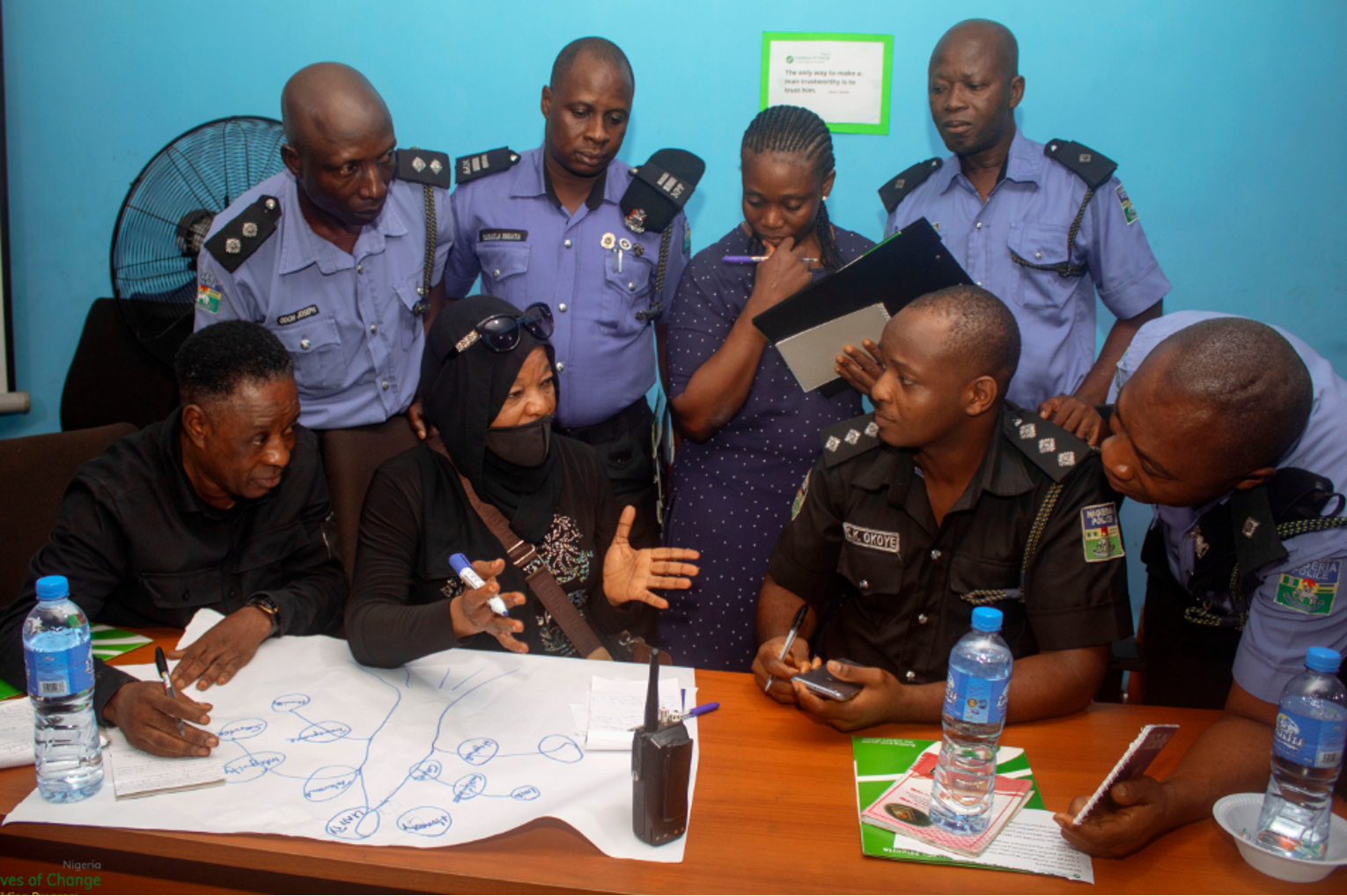
Trustbuilding Program Nigeria – police and community dialogue
A program built for scale
Launched in 2019 with three pilot countries, the TBP has grown into a genuinely
global undertaking.
The evaluation, drawing on 56 key informants, 23 in-person consultations, 70 survey responses (TBP team members, partners and participants on the ground) and three in-depth country case studies (Kenya, Indonesia and Australia), paints a picture of a program that not only survived the disruption of the Covid-19 pandemic but continued to expand through it.
One in three local Trustbuilding Program participants were entirely new to Initiatives of Change. Nearly one in four had never before engaged with a program of this kind. The word spread not through advertising, but through personal networks and peer referral. Over half of participants arrived because someone they trusted invited them to come.
What real transformation looks like
It would be easy to present statistics and call it impact. What the evaluation captures instead is something more textured and more human.
The moment a young person, raised inan era of distraction and noise, chooses to sit in structured silence and reflect. The moment a community leader applies the language of dialogue to a workplace conflict. The moment two people from opposing religious traditions share a meal, then a story, then a wound.
The evaluators noted the significance of younger participants valuing structured reflection time, which they wrote, is a sign of “deep behavioural engagement rather than superficial participation.” This is not checkbox training. These are shifts in how people understand themselves, their relationships and their responsibilities to the communities they inhabit.
"After participating in the Trustbuilding Camp, I finally feel free from the fear caused by the negative stigma I held toward people different from me in religion, tribe, and culture."
~ Trustbuilding Program participant Indonesia
Nearly half (48%) of all participants report using the skills they acquired through TBP on a regular basis such as dialogue, empathetic listening and facilitation skills, with 21% applying them daily or weekly. Only 6% reported no application at all. These are not skills that fade when the workshop ends. They travel with people into workplaces, households and public life.
From Broken Ground to Safe Spaces
One of the evaluation’s most striking findings concerns speed. Across multiple country contexts, TBP has demonstrated a capacity for rapid, measurable tension reduction.
In Kenya, program documentation records an 80% reduction in tensions between Christian and Muslim communities following trustbuilding activities, a short-term result, the evaluators note, distinct from the longer-term network effects still emerging.
In post-terror contexts such as Garissa, Kenya, healing walks have been followed by sharing circles, deliberate, structured acts of collective memory that create immediate shifts in emotional climate, even when structural change takes longer to arrive. People from opposing religious, ethnic, and political backgrounds were brought into structured dialogue. Communication channels that had been severed by violence were reopened.
Safe spaces were created, not as metaphors, but as real, facilitated encounters and in places scarred by terror attacks they supported community post-trauma recovery. These are early signals, but they are credible pathways to lasting community change.
In Nepal, TBP's work contributed to a government budget allocation for trustbuilding - a signal that the program’s ideas have moved from community halls into official policy.
In Australia, civic mobilisation supported by TBP methods contributed to increased political representation.
“The coexistence between people has improved, now people are coming to understand each other.”
~ Participant, Kenya
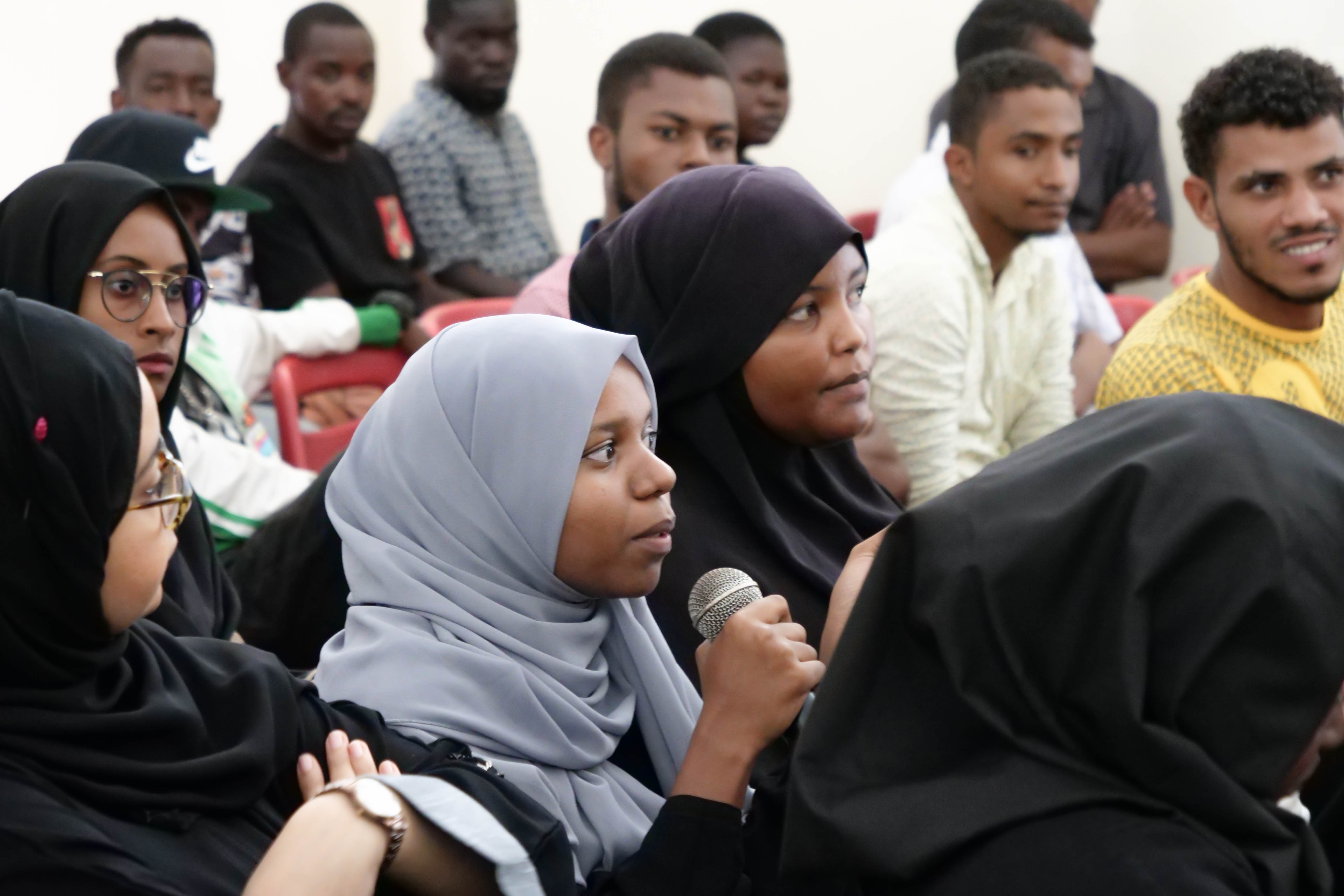
TBP Kenya dialogue
TBP’s transnational architecture accelerates learning. When a tested approach works in one country, it can be shared rapidly across a global network of like-minded activists. Trustbuilders in different time zones and cultural contexts find solidarity and practical insight in each other’s experiences. The peer-learning ecosystem is not just a feature of the program, it is, as the evaluators note, a short-term impact in its own right.
Change that matters
The evaluation’s findings arrive at a moment when the global need for exactly this kind of transformative work has never felt more acute.
Across democracies and fragile states alike, declining trust is not merely a social symptom, it is a structural risk that erodes the foundations of governance, collective action, and shared reality itself.
What TBP offers is not a cure-all. The evaluators are clear that systemic change is still emerging, that evidence of long-term impact continues to develop, and that the program must work to improve how it measures and communicates its outcomes. But it offers something perhaps more important than a finished answer: a proven methodology.
Trust requires people, ordinary, flawed, courageous people, willing to sit across from someone different, to listen with more care than they might feel ready for, and to take one small action in the direction of understanding.
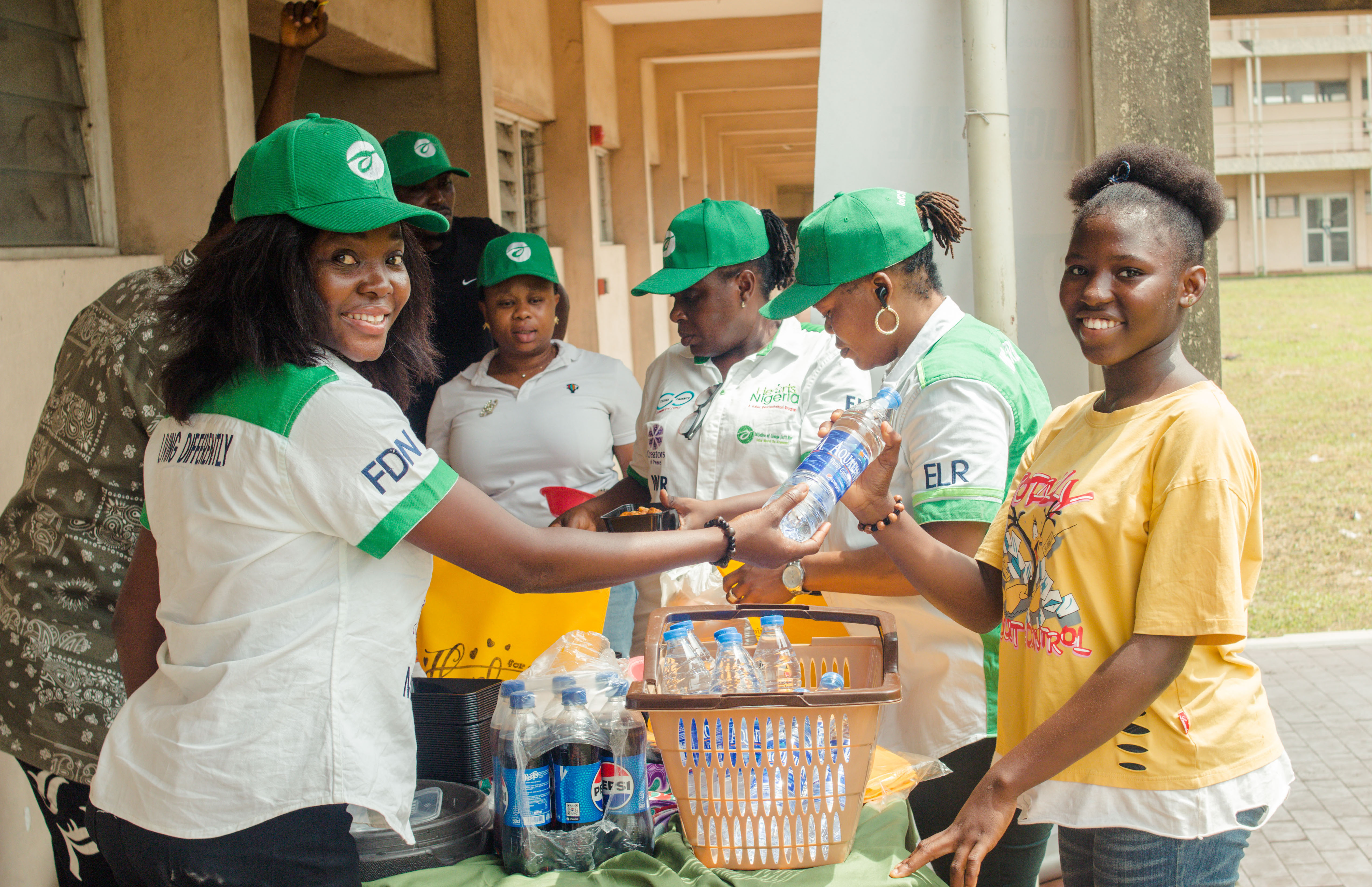
TBP Nigeria police station outreach
In 14 countries, across faiths and frontlines and political fault lines, that is exactly what is happening. One conversation at a time. One person at a time. And according to the independent evidence now on record, it is working.
Based on the Independent Evaluation Summary of the International Trustbuilding Program
Randall Puljek-Shank and Valery Perry
2024/25